Before you buy
Front-Only vs Front-and-Rear: Is the Rear Camera Worth It?
A rear dash cam covers what a front lens cannot: rear-end hits and parking bumps. On the H2 it is a $20 kit option, not part of the standard box.
A rear camera is worth it when the risk you are trying to cover sits behind the car: being rear-ended at a light, a tailgater, or someone reversing into your bumper in a lot. A front camera cannot see any of that, and no amount of detail in the forward lens changes it. On the H2 the question is narrower than it sounds, because the standard box already records two angles — the road ahead and the cabin — and the rear camera is a $20 kit option that plugs into the same camera. You are deciding whether to add a third channel, not which product to buy.
What does a front-only dash cam actually miss?
Everything outside the forward lens. The H2’s road camera covers 136.8° diagonally — 115.8° horizontal and 61.4° vertical — which takes in the road ahead and a good part of the lanes either side of you, and stops there. A rear-end impact, a car that backs into you while you are stopped, and a parking bump taken on the rear bumper all happen outside that frame. If a dispute turns on who hit whom from behind, a front-only recording simply has no footage of the event itself, only of your own car being shoved forward.
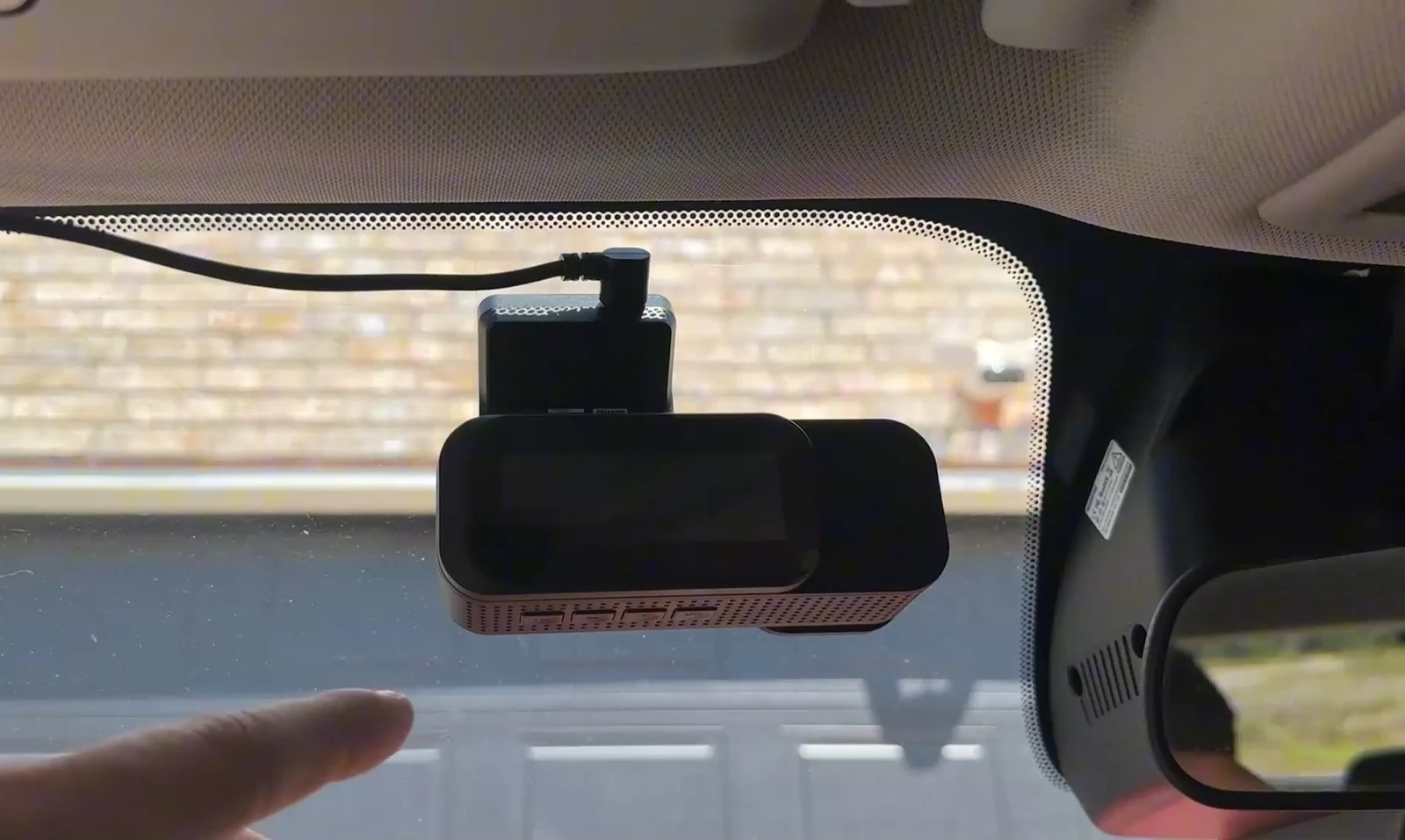
The cabin camera in the box does not close that gap. It is pointed at the inside of the car, and the sliding display covers its lens when you shut it. It is the channel that matters for a rideshare driver, and a useful second angle — it is just not a rear view.
Is the H2 a front-and-rear camera out of the box?
No — out of the box it is front-and-cabin. The standard box holds the H2 itself with its road camera and its 1080p cabin camera, a 64 GB microSD card already installed, the adhesive mount and pads, the B+/ACC/GND hardwire cable and fuse-box adapter set, and — with the current batch, free while supplies last — an OBD-II power adapter. There is no rear camera and no car-charger cable in it.
The rear camera is an option on the same product page: as of September 2026 the camera on its own is $179 and the version with the rear-camera kit is $199, so the rear channel is a $20 difference. The kit is a separate 1080p unit with its own cable, it is currently between shipments with a restock waiting list, and we do not list it as a standalone product — see the last section for how an existing owner arranges one.
How do the H2’s three cameras compare?
All three use the same imaging sensor, a 2 MP CMOS OS02H10 of 1/2.8-inch format; what differs is the lens in front of it, the field of view it gives, and the file each channel writes. The road camera has the wider F1.55 aperture and gets hardware HDR, WDR and 3D DNR; the cabin and rear cameras are both F2.0 and both write 1080p. The frame-rate menu offers 25 / 30 / Auto fps and ships set to 25 fps.
| Camera | In the standard box? | Video written to the card | Lens aperture and focal length | Field of view (diagonal / horizontal / vertical) | What this channel is pointed at |
|---|---|---|---|---|---|
| Road | Yes | 2560×1440 px, interpolated from a native 1920×1080 px sensor, up to 30 fps | F1.55, 3 mm, 2G4P | 136.8° / 115.8° / 61.4° | The road ahead, through the windshield |
| Cabin | Yes | 1920×1080 px, up to 30 fps | F2.0, 3 mm, 2G3P1R, 940 nm IR-compatible optics | 138° / 115.8° / 62° | The inside of the car; covered when the display slides shut |
| Rear | No — $20 rear-camera kit option, currently between shipments | 1920×1080 px, up to 30 fps | F2.0, 2G3P | 132° / 107° / 55° | Behind the car |
Read across rather than down: the rear channel’s numbers sit close to the cabin channel’s, not the road channel’s. That is the honest shape of the trade — a third angle at 1080p, from the same sensor, through a slightly narrower lens.
Does the rear camera need a subscription?
Not to record. Local recording to the microSD card needs no plan on any channel, the rear one included — the card keeps looping in 1, 2 or 3 minute segments with event clips locked out of the loop, plan or no plan. What a plan buys is everything that happens away from the car: remote live view, push alerts, cloud event storage, live GPS and track history. Those start at $9.99 a month on Basic and run to $29.99 on Premium, and every new device has 30 days of Standard benefits at no charge that the owner claims in the app after pairing. Full detail is on the plans page and in our guide to what a dash cam subscription actually pays for.
One thing worth knowing before you rely on a remote clip: the cloud copy is 1280×720 at 30 fps, smaller than the file kept on the card. If a rear-end incident matters, pull the original off the card rather than forwarding the cloud version.
What does a third channel cost you in card space?
Card time, not money. Every channel writes to the same microSD card, so adding the rear view means the loop comes around sooner than it would with two channels at the same settings. We publish no hours figure for this, and you should distrust anyone who does: how long a card holds depends on how many channels run, the frame rate, the segment length, how much of the card is held by locked event clips, and whether the camera also records while parked.
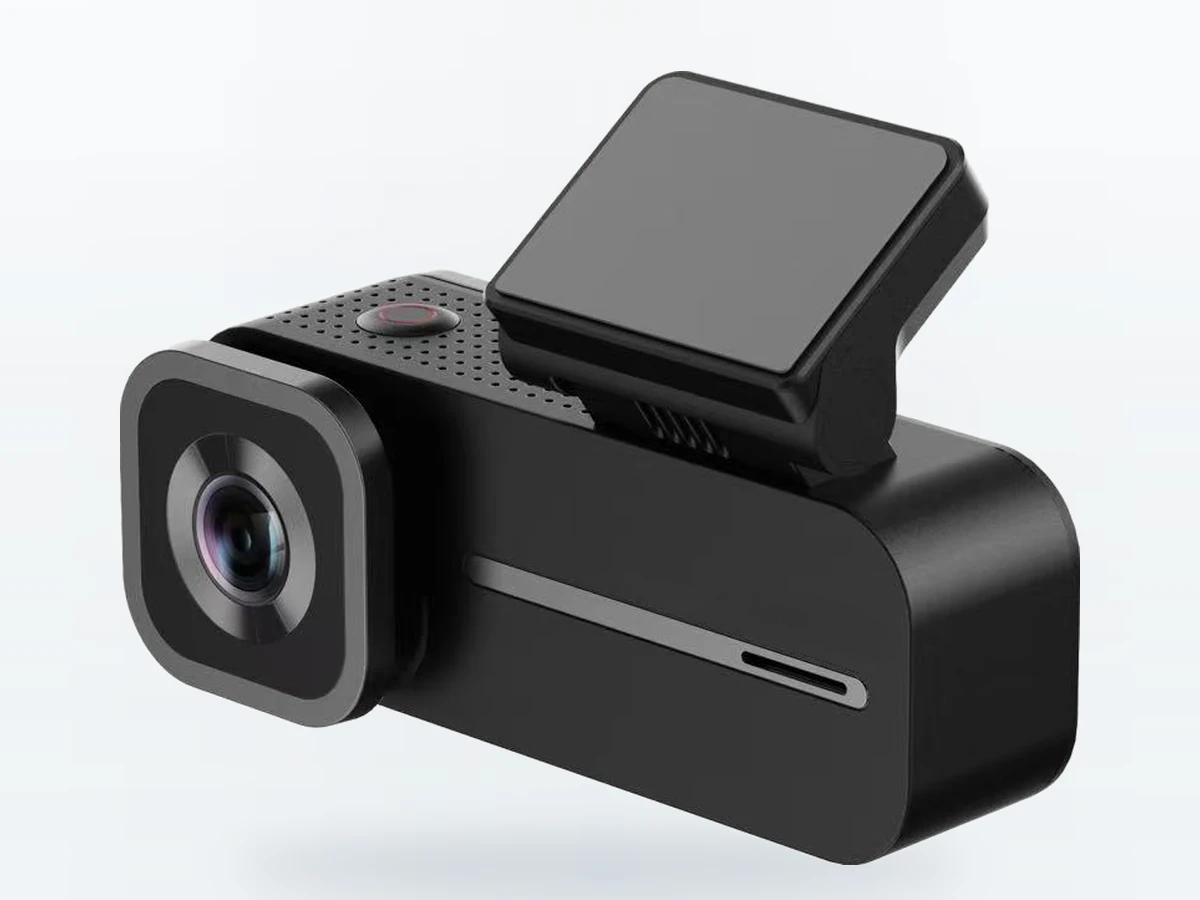
The H2 ships with a 64 GB card installed and supports 32–256 GB cards rated U3 or V30 and above, so a larger card of that rating is the lever to pull if you add the rear channel and want the loop to reach back further — the reasoning is in our guide on why U3/V30 matters.
When is a rear camera the wrong choice?
When the thing you actually want from it is something no dash camera channel can promise. We publish no night-vision distance figure and no claim that a plate will be readable, front or rear, because the specification does not support one — a rear camera gives you a recording of what happened behind the car, which is not the same as a guaranteed license plate. If plate capture on demand is the requirement, this is the wrong purchase at any channel count.
A few other cases where the $20 is better left unspent, at least for now:
- You want 4K behind you. The rear kit is 1080p, and the road camera’s 2560×1440 mode is interpolated from a native 1920×1080 sensor. If native 4K is the requirement, the H2 is not the camera.
- Your risk is mostly inside the car. For rideshare and delivery work the cabin channel already in the box is the one that earns its place; a rear view is a nice extra rather than the point.
- You are hoping it extends the parked watch. It does not. AI Sentinel runs for the window you set, up to 24 hours, and low-voltage protection ends it when battery voltage reaches the threshold; a third channel changes neither limit and needs the same constant power from the hardwire cable or the OBD-II adapter. Our guide to powering a dash cam for parking mode covers the choice.
- Installation is the part you are unsure about. The rear unit is wired, so a cable has to reach the back of the car, and where it sits and how it routes depend on your vehicle’s rear glass, trim and hatch. We publish no per-vehicle instructions, so check the install videos and plan the run before you commit adhesive.
- You need it this week. The kit is between shipments. The camera itself ships normally with free standard shipping in the US.
How do you add the rear camera to an H2 you already own?
By email, once it is back in stock. The rear unit plugs into the same H2 and can be added later, so buying the camera alone today does not rule it out: write to support@smartsfweb.com and one can be arranged on its own for the same $20. We do not list it as a separate product on the store, which is why there is no add-to-cart button for it. If you already know you want three channels, pick the $199 kit option on the product page when you order, or join the restock waiting list there.
The short version
- A rear camera covers what a forward lens structurally cannot: rear-end hits, tailgaters and parking bumps taken on the back bumper.
- The H2’s standard box is front-and-cabin, not front-and-rear. The rear channel is a $20 kit option — $179 for the camera alone, $199 with the kit, as of September 2026.
- All three cameras share one 2 MP CMOS OS02H10 1/2.8-inch sensor; the rear channel is 1080p at F2.0 with a 107° horizontal field of view.
- Recording on any channel needs no plan; remote live view, alerts and cloud storage do, and the cloud copy is 1280×720, smaller than the card’s file.
- A third channel shortens the loop on the same card; we publish no hours figure, and nobody honestly can.
- It will not read plates on demand and will not push the parked watch past the window you set, up to 24 hours, or past the low-voltage cutoff.
- The kit is between shipments; owners who skip it now can add one later by emailing support@smartsfweb.com at the same $20 once it is back in stock.